Mary berry chicken with asparagus and lemon: Foolproof Crispy Skin
Viral Meta Description (155 chars): Mary Berry’s method for crispy chicken with tender asparagus & sharp lemon. The 5-minute resting secret guarantees perfect pan juices. No soggy vegetables. Metric & imperial provided.
10 LSI Tags: Mary Berry Baking Bible, roast chicken breast, lemon butter sauce, spring recipe, British asparagus, weeknight dinner, foolproof roasting, pan sauce, chicken timings, family meal.
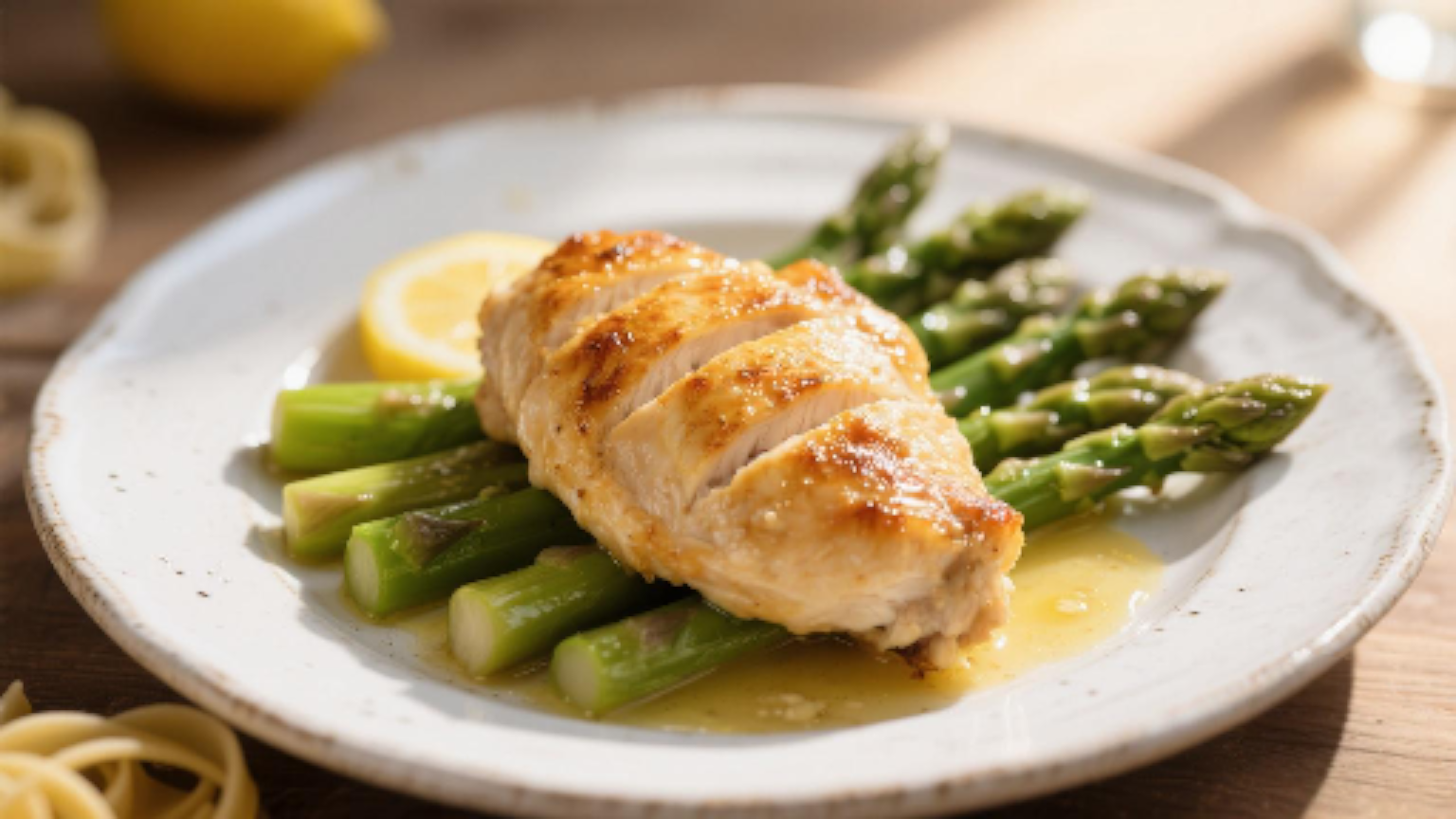
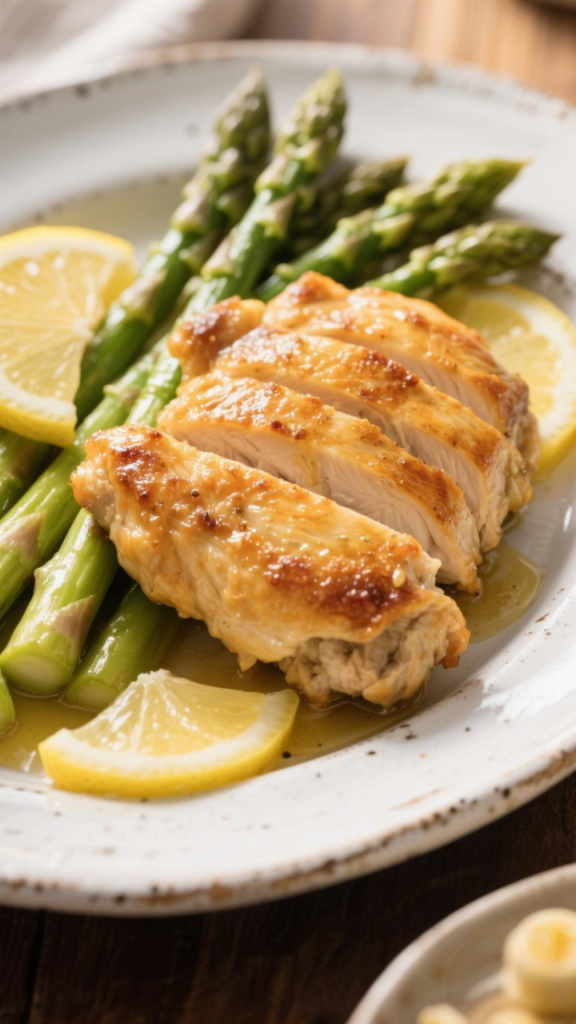
This is a dish of glorious contrasts. Imagine skin crisped to a savory gold, giving way to succulent, juicy meat. Beneath, spears of asparagus, steamed in the fragrant chicken drippings, emerge tender-crisp. A sharp, buttery lemon sauce ties it all together. Mary Berry champions dishes that are elegant in their simplicity, where technique, not complexity, creates brilliance. This is the foolproof version because we address the core science: rendering fat for crispness and managing vegetable moisture to avoid a soggy bottom.
The Science of Crispy Skin & Tender Vegetables
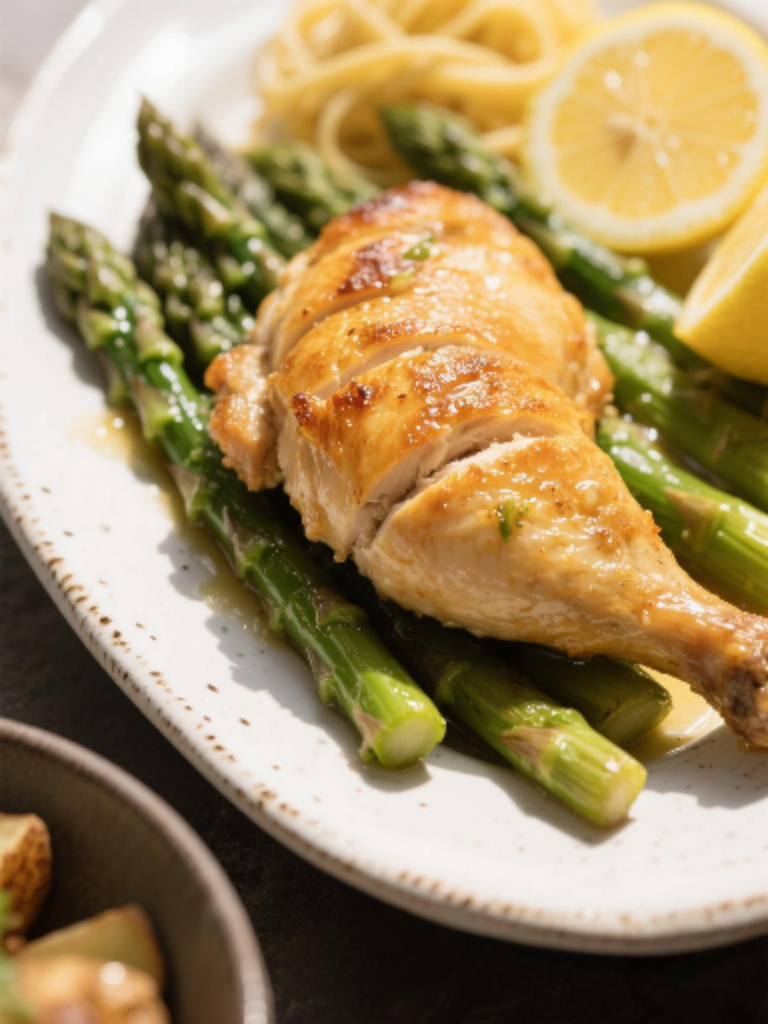
A standard oven’s convection can dry out chicken before the skin crisps. Mary’s method uses a two-stage heat process. Starting with a searing hot pan renders subcutaneous fat quickly, creating the foundation for crackling. Finishing in a consistent oven heat cooks the meat gently. The asparagus cooks in the same pan, absorbing savory flavors while its high water content steams in the confined space, preventing dryness. The acid in the lemon juice denatures proteins in the pan, lifting the fond for a sauce that is bright, not bitter.
- Starch is absent here; water management is key. Asparagus contains ~93% water. Crowding the pan steams them perfectly.
- Fat conducts heat. The chicken skin’s own fat, once rendered, becomes the cooking medium for the vegetables.
- Acid stabilizes color. A splash of lemon juice early on helps keep the asparagus a vibrant green.
You”ll also needed
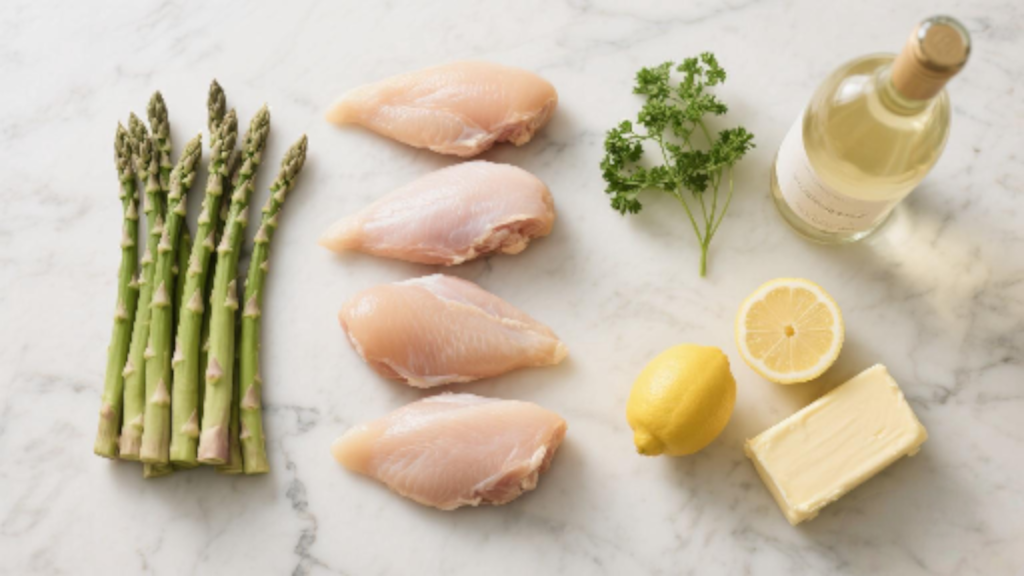
Don’t skimp on quality. Use full-fat butter and the best free-range chicken you can find for flavor.
- 4 boneless, skin-on chicken breasts, 180-200g each (6-7oz each). Uniform size is critical for even cooking.
- Fine sea salt, 1½ tsp (9g) total for seasoning.
- Freshly ground black pepper, 1 tsp (3g) total.
- 250g (9oz) fresh asparagus spears, woody ends snapped off.
- 2 large, unwaxed lemons. One for zest and juice, one for slicing.
- Unsalted butter, 50g (1.8oz / ¼ cup).
- Extra virgin olive oil, 1 tbsp (15ml).
- Dry white wine, 60ml (2fl oz / ¼ cup). A Sauvignon Blanc works perfectly.
- Fresh flat-leaf parsley, a small handful, finely chopped (15g / 0.5oz).
Step-by-Step Method (The Masterclass)
Step 1: Prepare the Base
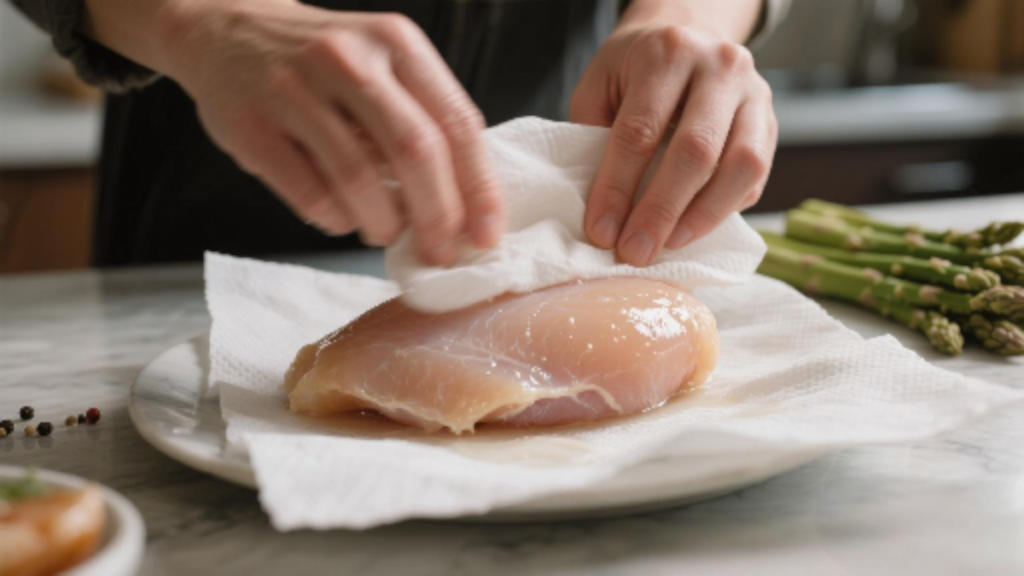
Pat the chicken breasts completely dry with kitchen paper. Season generously all over with 1 tsp (6g) of the salt and the black pepper. This initial drying is non-negotiable for crisp skin. Zest one lemon and set aside. Juice the same lemon to yield 45ml (3 tbsp). Trim the asparagus.
Step 2: Create the Foundation
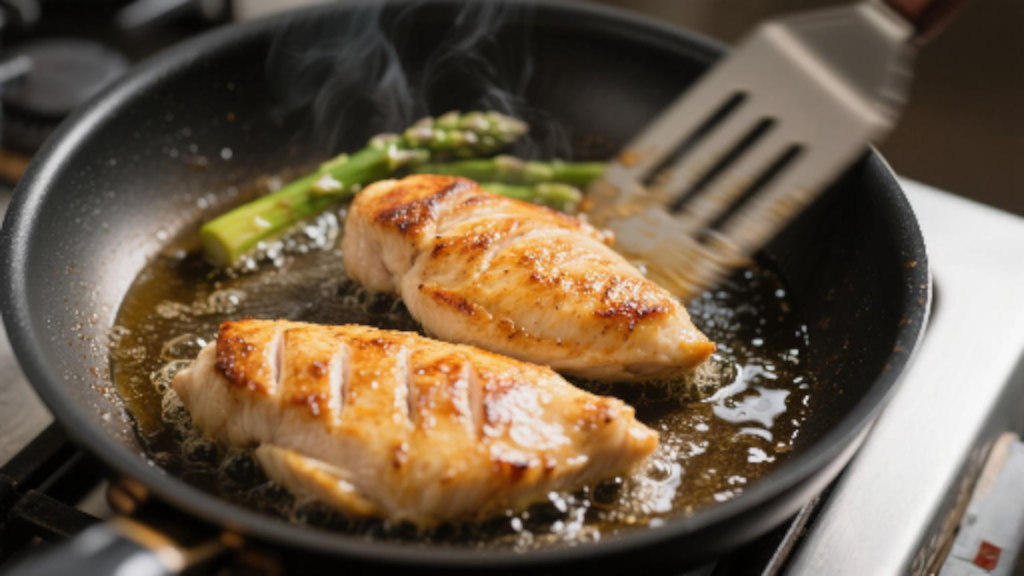
Preheat your oven to 200°C (180°C Fan / 400°F / Gas 6). Heat the olive oil in a large, ovenproof frying pan or skillet over a medium-high heat. Place the chicken breasts in, skin-side down. Press gently for full contact. Cook, undisturbed, for 5-7 minutes until the skin is deeply golden and releases easily from the pan.
Step 3: Build Flavor Layers
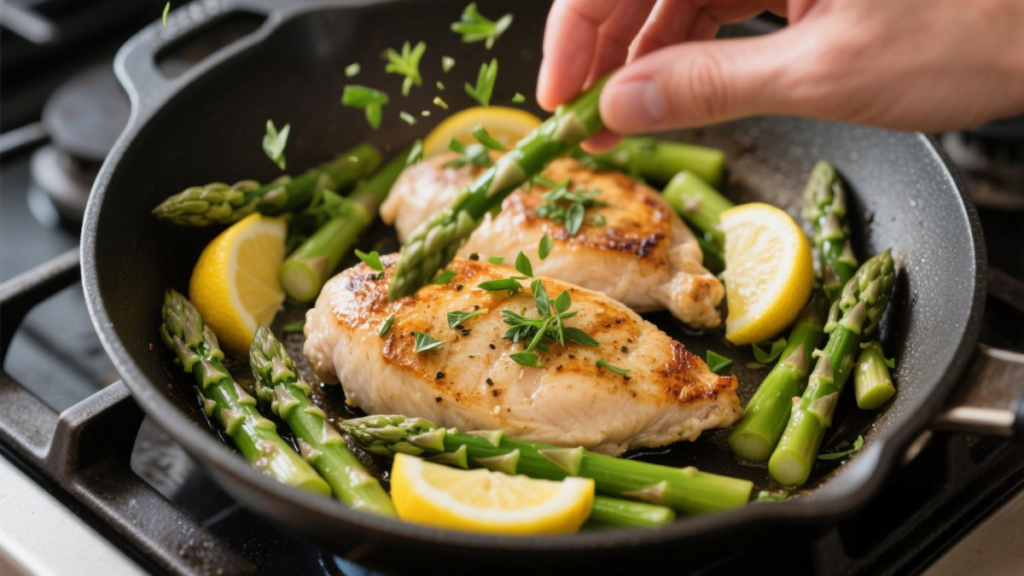
Turn the chicken breasts over. Scatter the asparagus around them. Slice the second lemon and tuck the slices into the pan. Dot 25g (0.9oz) of the butter over the asparagus. Transfer the entire pan to the preheated oven. Roast for 15-18 minutes. The chicken is done when the thickest part reaches 72°C (162°F) and the juices run clear.
Step 4: The Piping Hot Sauce
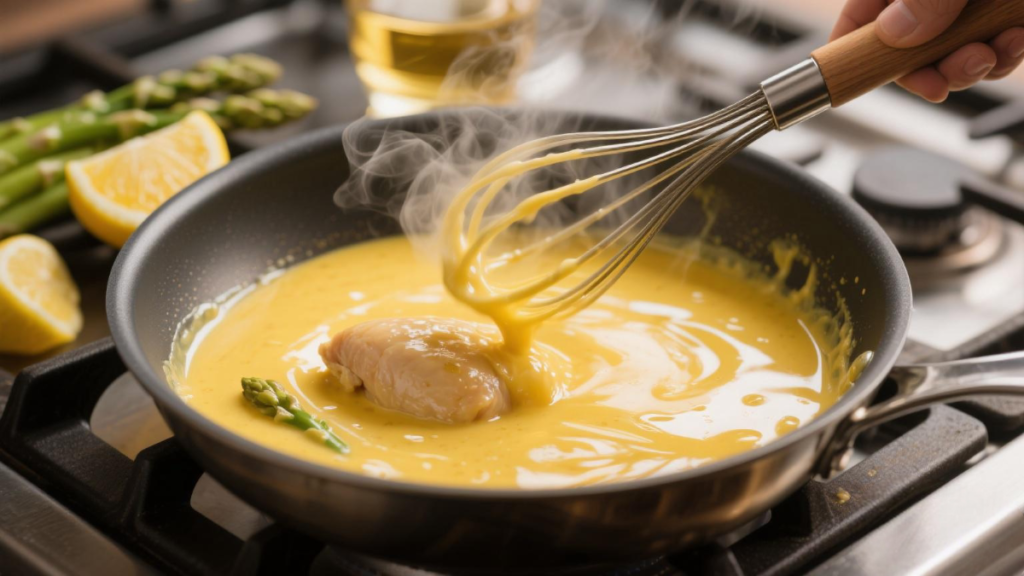
Remove the pan from the oven. Transfer the chicken, asparagus, and lemon slices to a warm plate to rest for 5 minutes. This allows juices to redistribute. Place the hot pan back on the hob over a medium heat. Pour in the white wine and lemon juice. Bring to a simmer, scraping up all the browned bits with a wooden spoon. Simmer for 2 minutes until slightly reduced. Whisk in the remaining 25g of butter and the lemon zest until the sauce is glossy and emulsified. Stir in the chopped parsley.
Troubleshooting
Why is my chicken skin rubbery? The pan wasn’t hot enough, or the skin was damp. Always pat dry and wait for the oil to shimmer before adding the chicken. Do not move it for the first 5 minutes.
Why are my asparagus spears watery and limp? You likely overcrowded the pan or used spears that were too thin. They need space for steam to circulate. If using very thin spears, reduce the oven time by 3-4 minutes.
Why is my lemon sauce greasy or separated? The sauce split because the heat was too high when adding the final butter. Remove the pan from direct heat and whisk vigorously as the butter melts. The residual heat is enough.
Storage & Freezing
This dish is best enjoyed immediately. The asparagus will lose its crisp-tender texture upon reheating.
To store leftovers, place cooled chicken and asparagus in an airtight container for up to 2 days in the refrigerator. Reheat gently in a covered dish at 160°C (140°C Fan / 325°F) for 12-15 minutes until piping hot.
Freezing is not recommended for the assembled dish. The asparagus becomes unpleasantly soft upon thawing and reheating. You can freeze the uncooked, seasoned chicken breasts separately for up to 2 months.
Sensible Variations for This Classic
For a Creamier Finish: After making the pan sauce, reduce the heat to low and stir in 60ml (¼ cup) of double cream. Warm through without boiling. This creates a luxurious, velvety texture Mary would approve of for a special occasion.
Using Dried Herbs: If you lack fresh parsley, use 2 teaspoons of dried tarragon. Add it directly to the wine and lemon reduction in Step 4. Dried herbs benefit from simmering to release their full flavor.
Tray Bake Method for a Crowd: Double all ingredients. Use a large, ridged roasting tray instead of a frying pan. Sear the chicken in batches, then return all to the tray with asparagus. Roast as directed. The larger surface area may require a 3-5 minute longer roasting time.
Your Questions, Answered Precisely
Q: Why must the chicken be at room temperature before cooking?
A: Placing cold chicken in a hot pan causes the muscle fibers to contract violently, squeezing out precious juices and leading to tough meat. Twenty minutes out of the fridge allows for gentler, even cooking from edge to center.
Q: Can I use asparagus that’s not perfectly fresh?
A: You can, but you must compensate. Submerge limp spears in ice water for 30 minutes to re-crisp. Peel the lower stalks if the skin seems leathery. Slightly older asparagus needs the full 7-minute sear on the chicken to maximize its roasting time.
Q: My sauce is too sharp. How can I fix it?
A: The balance of acid and fat is key. Whisk in an additional 15g (1 tbsp) of cold butter, piece by piece, off the heat. If it’s still too sharp, a ½ teaspoon of honey will round the edges without making it sweet.
Q: What is the best side dish to serve with this?
A: Mary Berry would suggest something to mop up the glorious sauce. Buttery new potatoes or a simple couscous flavored with the pan juices are ideal. A crisp green salad provides a refreshing contrast.